
Service Dogs Trained in Sacramento
Fully Trained Dogs for PTSD, Autism and Therapy Work
Start with what a service dog actually is, because the internet has muddied it badly. It is a dog trained to do a specific job for a specific person’s disability — press its weight into a chest, break a spiral, read a change in breathing, hold a space in a crowd. Not a vest. Not a registration certificate. A trained behavior, performed on cue, in a room full of distraction. That is what we raise here, and we raise very few of them at a time.
Quick Takeaways
- What we place: PTSD service dogs, autism service dogs, and therapy dogs. Two dogs a year, and that’s the entire list.
- How they’re trained: Positive reinforcement and a marker word. No corrections, no pressure, no startle.
- Where they’re trained: Sacramento — on the sidewalks, stores and transit your dog will actually work on.
- Scale, on purpose: 2 dogs, 2 trainers, amazing results.
- First step: The application. It’s long, and we read all of it.
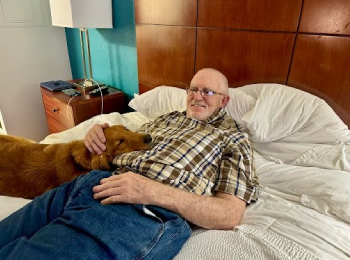
PTSD Support Dogs
Tailored companions for courage — service dogs trained to soothe and support PTSD heroes daily.
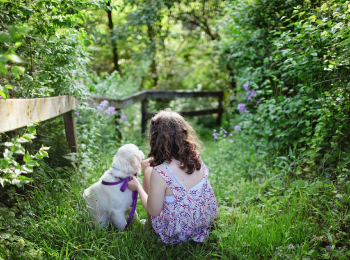
Autism Support Dogs
Gentle dogs offering comfort and focus for children with autism.
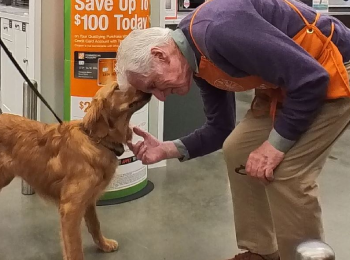
Therapy Dogs
Joyful pups trained with kindness to spread profound happiness and joy.
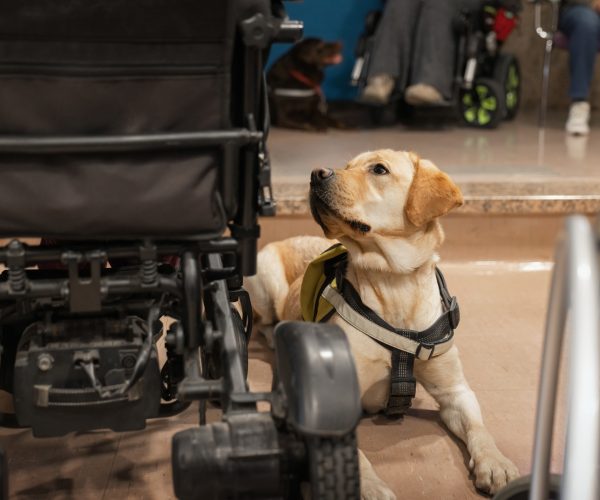
A Service Dog Is Defined by the Task, Not the Vest
This is where most of the confusion starts, so it’s worth settling early.
Under the ADA, a service animal is a dog trained to perform work or a task directly related to a disability. The Department of Justice is explicit that comfort alone isn’t a task, which is why emotional support animals don’t qualify — and equally explicit that no certificate, registration, vest or ID is required. If someone sold you one, they sold you a souvenir.
What actually earns access is a dog doing something on cue. Reliably. In a crowded room.
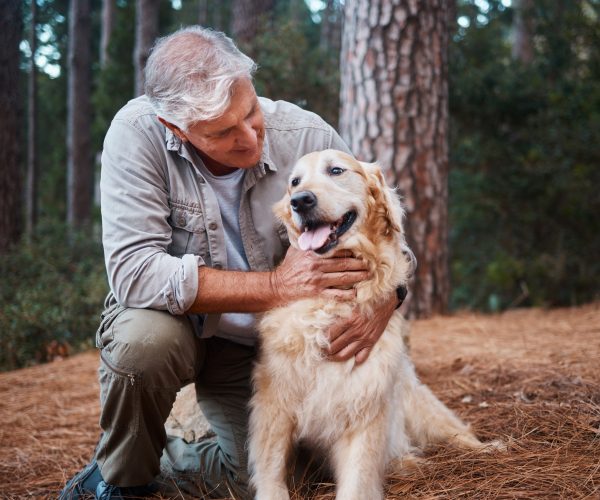
PTSD Dogs Work the Body, Not the Mood
Weight across the chest when you need holding down. A body planted between you and whoever is standing too close.
Those are cued behaviors with criteria attached, not a dog being sweet — and that is exactly why one holds up at a DMV counter or a VA appointment when a friendly pet would not.
Autism Dogs Work for a Child, Inside a Family
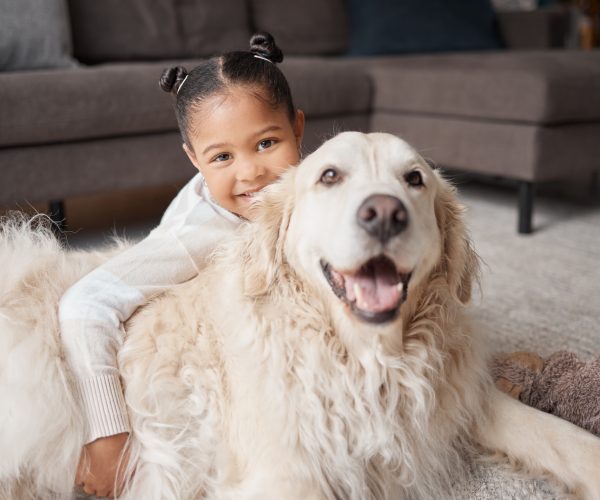
The dog works for the child, but it lives with everyone. It anchors the routine that has to stay identical, buffers the crowd at drop-off, interrupts a loop before it escalates, and reads the early signals an adult in the front seat would miss.
The goal is usually concrete rather than clinical: the store, the birthday party, a full night’s sleep.
Therapy Dogs Work for Everyone Except Their Owner
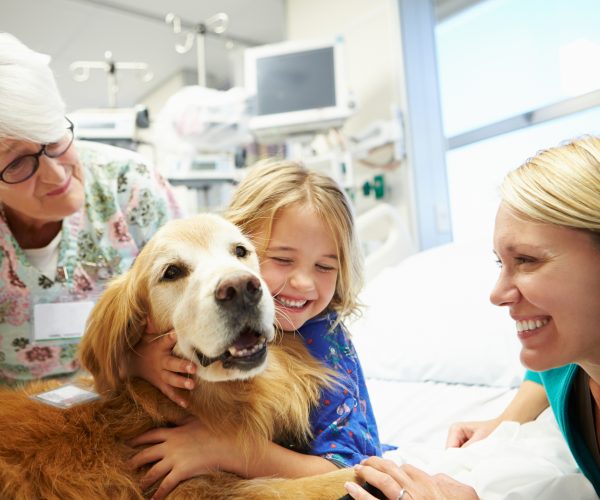
Different animal, different job. A therapy dog visits a ward, a classroom or a care home and works with people who aren’t its handler — which means temperament first and public-access law nowhere, because therapy dogs have no ADA access rights.
Screening matters more than training here. You can teach a dog almost anything except to enjoy strangers.
Where the Training Actually Happens
Not in a classroom, and not on a field.
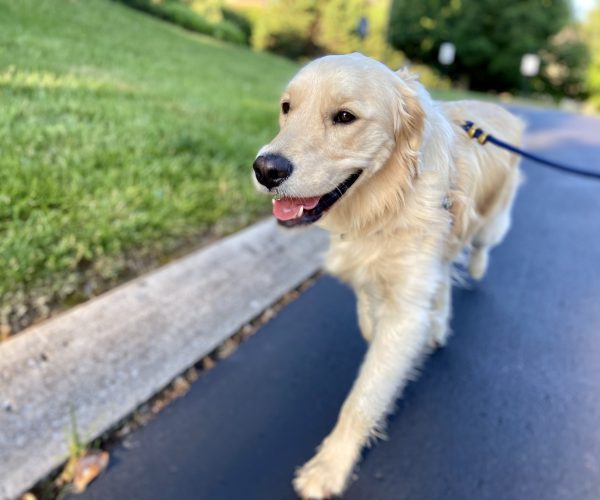
A dog that holds a down-stay in your kitchen has proved nothing. The same dog holding it under a café table, on a transit platform, or in a store aisle with a cart squeaking past is a dog you can plan a day around — and the only way to get there is to take that dog to those places, over and over, until none of it is interesting any more. Sacramento is where ours do that.
The method behind it has a name and a reason, and there’s a page for both.
Latest Articles
Frequently Asked Questions
What kinds of service dogs do you train?
PTSD service dogs and autism service dogs, both ADA compliant, plus therapy dogs for facility visits. We raise a very small number of dogs each year. If you need something outside those programs, ask — we’ll tell you straight.
Where do you train your service dogs?
In and around Sacramento, California, in the real environments the dogs will have to work in — sidewalks, stores, transit and public buildings.
How do I apply for a service dog?
Through the application form. It asks for your medical diagnoses from a physician, your history with dogs, who else in the household will help, and the specific tasks you need. Take your time with the last question; your story is the part that matters most.
What training methods do you use?
Positive reinforcement with a marker word, the approach the site’s articles call the YES method. No aversive tools and no corrections, on any dog, at any stage.
How long does it take to get a trained service dog?
Longer than anyone wants. A dog is proofed one environment at a time and the work isn’t finished until it holds up in all of them. Ask us where things stand rather than assuming a date.
Start Here
Everything starts with the application, and it is long on purpose. It asks for your medical diagnoses from a physician, what your household looks like, which dogs already live there, and the tasks you actually need. Then it hands you an open box for your story. That box is the one we read hardest — most of a good match is decided inside it.
Training with YES · Sacramento, California · trainingwithyes.com
Praise
Our Blogs
Get In Touch
Ready for a life-changing buddy? Reach out to Training with YES and let’s find your perfect canine hero today!