
The Trainers Behind the YES Method
A Career of Positive Reinforcement, and Not One Correction
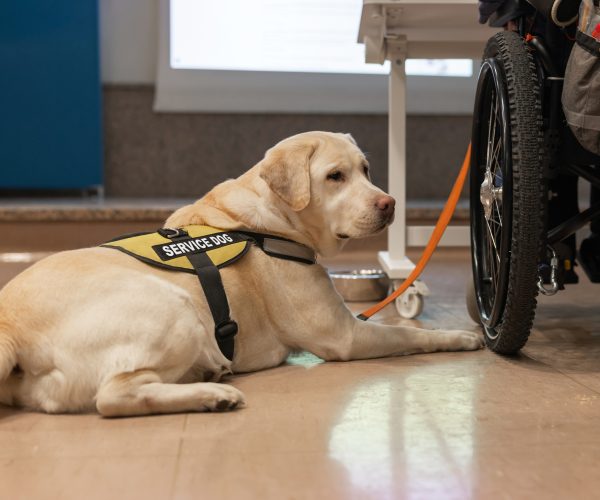
Most of what a service dog does looks unremarkable. It lies still under a table. It ignores a dropped french fry. It gets up when asked and settles again without being told twice. None of that is impressive until you understand that every one of those behaviors was built deliberately, in the place it would later be needed, and that the dog was paid for each one until it stopped needing paying. That’s the job — thousands of small, boring repetitions that add up to a dog somebody can lean on.
Quick Takeaways
- The team: Two experienced trainers. Tom handles most of the correspondence and trains on camera.
- The method: Marker training. “Yes” marks the instant the dog gets it right, and payment follows.
- What we don’t use: Corrections, aversive tools, anything built on pain or startle. No exceptions, no stages.
- The record is public: The training is filmed and the channel is open. Watch it before you commit to anyone.
- Our promise, plainly: We will never lie to you. We ask the same in return.
What the Word "Yes" Actually Does
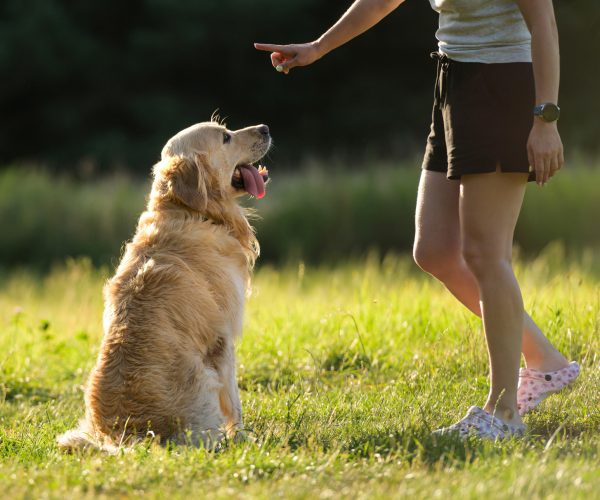
Timing is the whole trade.
A dog lives in a very short window. If you reward it two seconds late, you’ve rewarded whatever it was doing two seconds later — which is usually not the thing you wanted. A marker closes that gap. The instant the dog’s paw lands where it should, it hears “yes,” and that word means something specific: that, right there, is what earns the treat. It buys you time to get the food out of your pocket without blurring what you’re paying for.
That’s it. One syllable, used consistently, doing the work that a correction collar does badly.
Why We Don't Correct a Dog, Ever
Plenty of trainers still build reliability out of discomfort. A pinch, a startle, a raised voice at the right moment — it does produce a dog that stops doing the thing.
The trouble shows up later, under pressure. A dog conditioned by unpleasant consequences learns that the safest move when it feels stressed is to shut down and do nothing. That’s a defensible strategy for a pet. It’s a catastrophe for a service dog, because stress is precisely the condition in which its handler needs it to act.
So we build the other way around. The dog learns that offering behavior is how good things happen, which is the mindset you want when the room goes sideways.

Two Dogs, Two Trainers, and Why the Number Stays Small
Worth saying out loud: the ADA does not require a service dog to go through a professional training program at all. A handler can legally train their own. So the only reason to hire anyone is whether the dog that comes out the other end is genuinely better — and volume is how programs quietly stop being better.
A dog that will hold a down-stay in a crowded store isn’t made in a classroom. It’s made by taking that dog into the store, over and over, at different times of day, until nothing about the place is novel. Multiply that across sidewalks, transit, medical buildings and parking lots and you have hundreds of trips — for one dog. Run twenty at once and something gets skipped.
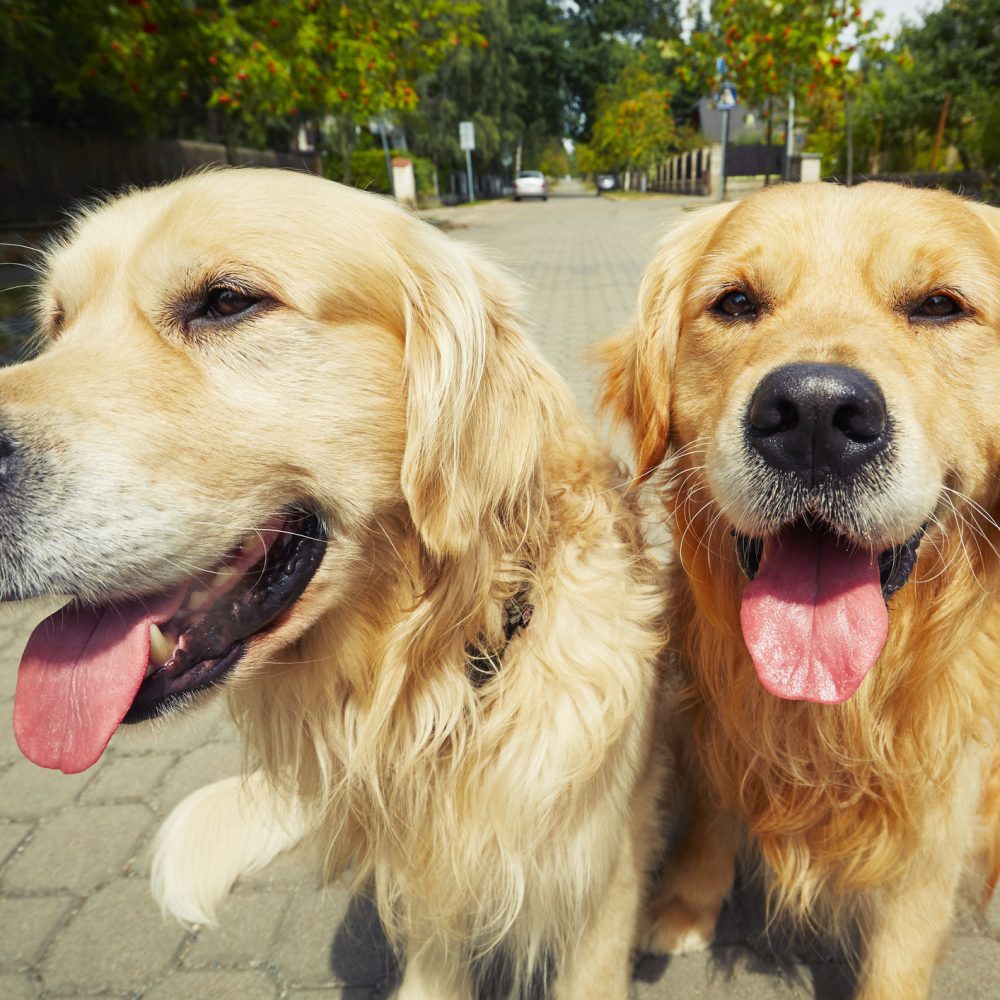
Two dogs, two trainers. It’s a small business by design, and the small number is the product.
Honesty, Both Directions
Our application says it outright: we will never lie to you, and we ask you to extend the same courtesy.
That isn’t decoration. A dog matched against an incomplete picture — an undisclosed dog already in the house, a diagnosis softened, a household that isn’t really on board — fails in month three. The handler is hurt, the family is out a great deal of money, and the dog gets sent back through no fault of its own. Telling us the awkward truth up front is the single kindest thing you can do for the animal.
We Film the Work, and You
Should Watch It
Here’s the most useful advice on this page, and it costs nothing.
Before you commit to any trainer — us included — go watch them train. Not a testimonial reel. Actual footage of a dog learning something, with the fumbles left in. Our YouTube channel carries years of it from around the greater Sacramento area, and the Facebook page carries the photographs.
What you’re looking for is whether the dog is enjoying itself and whether the trainer’s hands are quiet. Both are visible in about ninety seconds, and neither can be faked for a camera.
Frequently Asked Questions
Who trains the dogs at Training with YES?
Two experienced trainers, working a small number of dogs at a time in and around Sacramento, California. Tom handles most questions and trains on camera.
What is the YES method?
Marker-based positive reinforcement. The word “yes” marks the exact moment the dog does the right thing, and reinforcement follows. It does the same job as a clicker, with a marker you always have on you.
Do you use prong collars, e-collars or corrections?
No. Nothing in our training relies on pain, startle or intimidation, at any stage of a dog’s education.
Can I see your dogs being trained before I apply?
Yes, and we’d encourage it. The YouTube channel carries real training sessions rather than a highlight reel. Watch a few before you speak to anyone about a placement.
How many dogs do you train at once?
Deliberately few — two dogs, two experienced trainers, as the services page puts it.
Come and Ask Us Something Hard
We’d rather answer an awkward question now than smooth it over and have it surface later.
Training with YES · Sacramento, California · trainingwithyes.com