
Service Dog Programs in Sacramento
Four Programs, and How to Tell Which One You Need
Four programs, and they end up nothing alike. Two carry federal access rights. Two don’t. Two are matched to one person’s disability, one is matched to a building, and one is matched to a living room — which means the paperwork, the training and the law are all different depending on which one you walk into. Picking wrong is expensive. So answer one question first, honestly: who is the dog actually working for?
Quick Takeaways
- PTSD service dogs (ADA compliant): Task-trained for one handler. Deep pressure, behavior interruption, anxiety alerts, crowd buffering.
- Autism service dogs (ADA compliant): Usually placed with a child inside a family. Routine anchoring, buffering, early-signal alerts.
- Therapy dogs: Trained to work with people who aren’t the owner, in facilities, by invitation. No ADA public access.
- Two dogs, two experienced trainers: We train a very small number of dogs per year (2) to be therapy and service dogs.
- The deciding question: Who is the dog working for — you, a child, a room full of strangers, or nobody in particular?
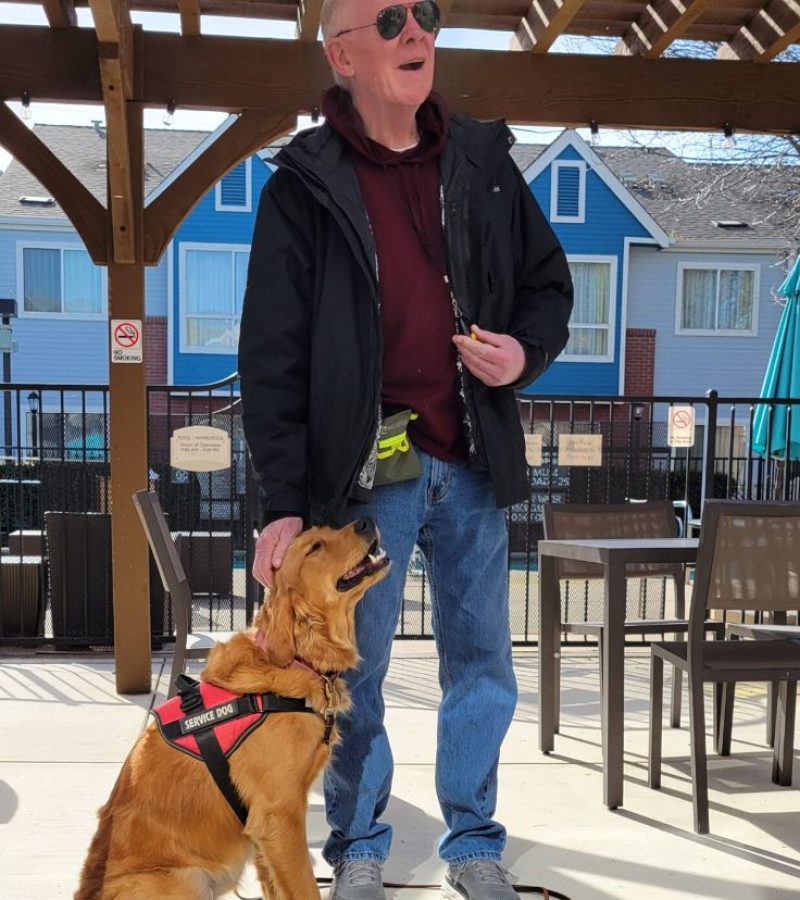
Trained PTSD Service Dogs, ADA Compliant
The handler is one adult with a diagnosis, and the dog’s whole job points at them.
Pick this program if the thing you need is physical and specific — something the dog does to your body or to the space around you, on cue, whether or not you’re in a fit state to ask twice. The tasks themselves are set out on the PTSD page.
Because those are trained tasks tied to a disability, the dog has public access rights under the ADA.
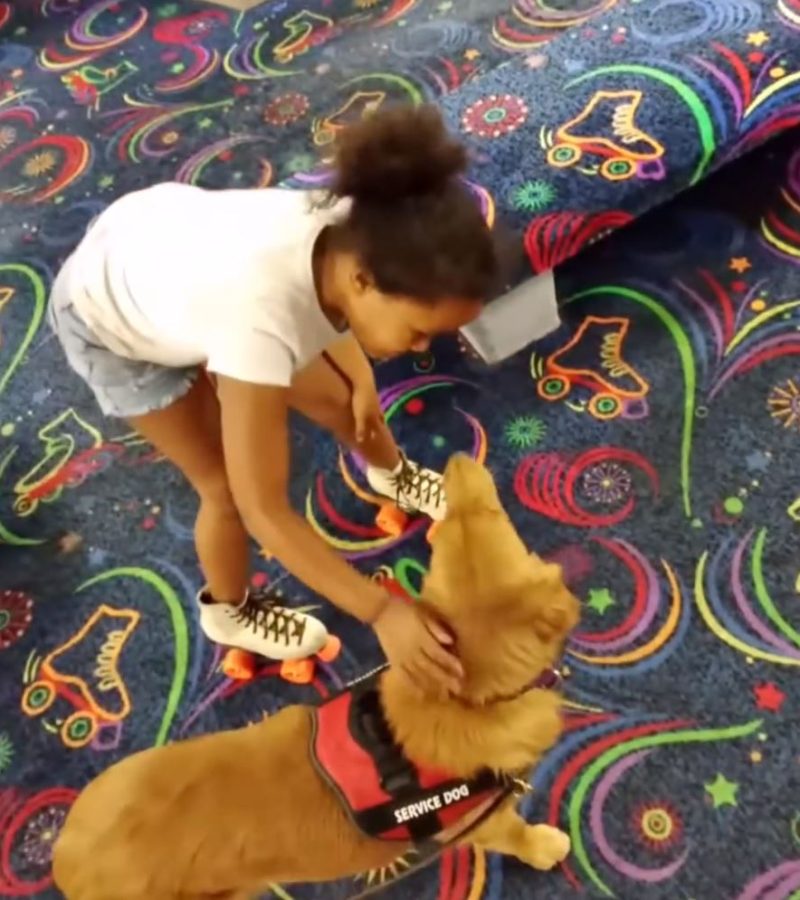
Trained Autism Service Dogs, ADA Compliant
Same legal category, very different household.
Here the handler is usually a child and the applicant is usually a parent, which changes what the dog needs to be good at. Routine, mostly — the same dog in the same harness in the same order, every morning, so one part of the day is never a surprise. Then buffering in crowds, interrupting an escalating behavior, and flagging the early signals a parent can’t see from the driver’s seat.
It also has to be bombproof with siblings, visitors, the neighbor’s kid and whoever else comes through the door. That’s its own training problem, and it’s the one families underestimate.
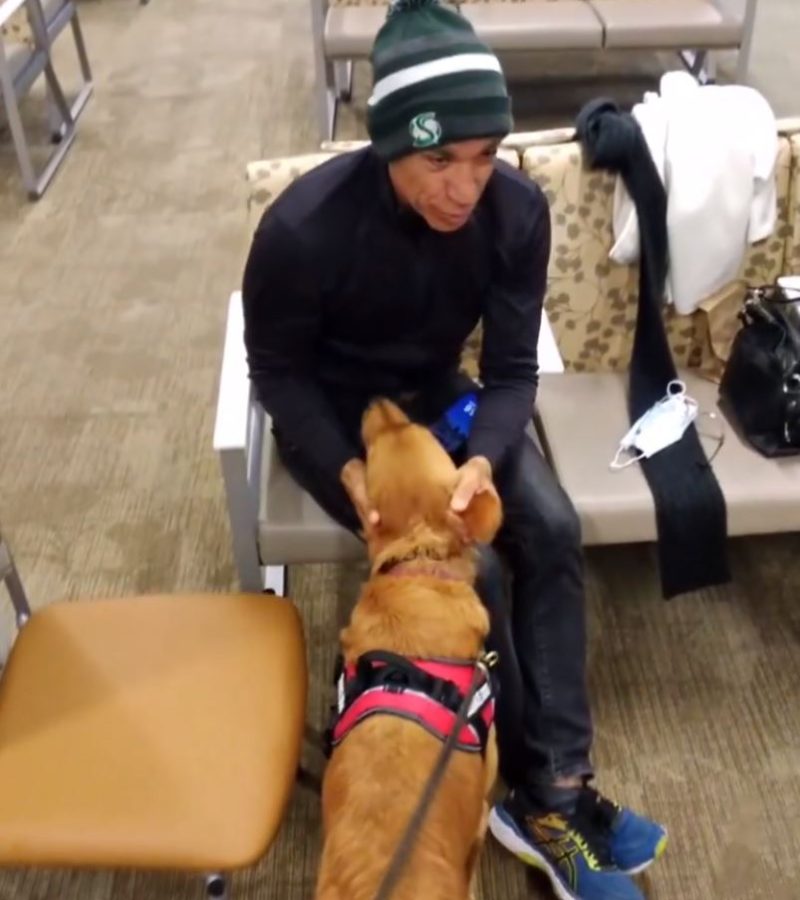
Trained Therapy Dogs
Pick this one if the dog is working for other people.
That single fact changes everything downstream. The ADA protects dogs trained to do a task for their own handler’s disability — a therapy dog is doing something else entirely, so it has no federal access rights and goes only where a facility invites it.
It also changes what makes a dog suitable. A service dog can be reserved with strangers and still be excellent. A therapy dog cannot, because strangers are the job.
Two Dogs a Year, and Why That's the Whole Point
Not every household needs a working dog. Some people want a dog that’s been trained to a service or therapy standard from day one.
We train 2 of these dogs a year — full service or therapy dogs, not pets with good manners. No shortcuts, no rushing the process — just the steadiness and reliability that come from doing this the same way, every time. Two. Not a marketing line, and not a number that moves because someone asks nicely.

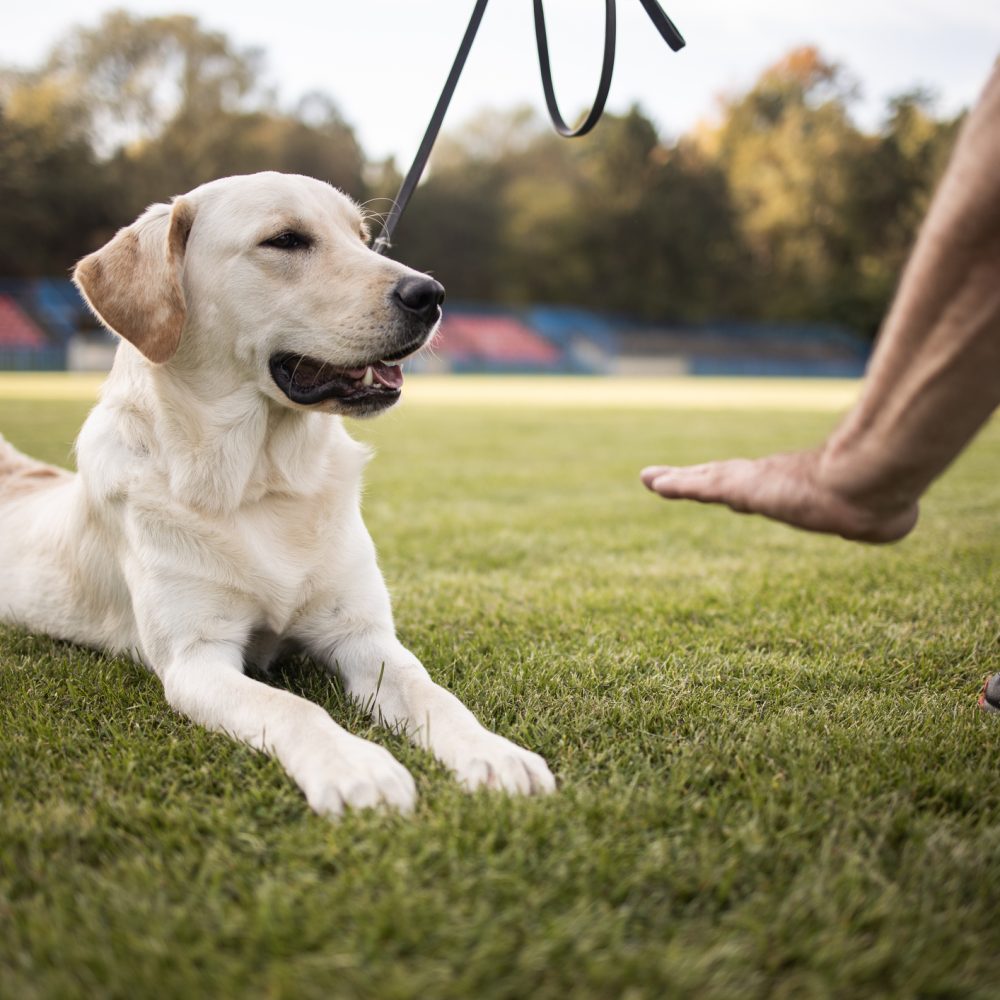
What All Four Programs Share
The method, first. Positive reinforcement, a marker word, no corrections, on every dog in every program — the About page sets out why we work that way and what it costs us in time.
The other thing they share is the bar. A dog that is charming at home and unreliable in a supermarket has not finished any of these programs, whichever one it was in. That is the slow part, it is where most of the work actually goes, and it is the reason the numbers here stay small.
Frequently Asked Questions
What is the difference between a service dog and a therapy dog?
A service dog is trained to perform tasks for one handler with a disability and has public access rights under the ADA. A therapy dog is trained to interact with many people who are not its owner, usually in a facility, and enters only where it is invited.
Which service dog program is right for me?
Ask who the dog works for. If it’s you and you have a diagnosis, that’s a service dog — PTSD or autism depending on the condition. If it’s a child in your household, it’s an autism service dog. If it’s other people in a facility, it’s a therapy dog.
Are your service dogs ADA compliant?
Our PTSD and autism service dogs are trained to perform tasks directly related to a handler’s disability, which is the ADA’s standard. Therapy dogs are not service animals and do not carry those rights.
What does an autism service dog do for a child at school?
It anchors the routine, buffers the crowd at drop-off, interrupts a behavior that is starting to escalate, and flags early signals a parent cannot see from the driver’s seat. Schools run their own approval process, so start that conversation early.
How many dogs do you take on at a time?
Deliberately few — two dogs and two experienced trainers. That ratio doesn’t change just because the waitlist does.
Pick the Program, Then Apply
Still not sure which one fits? Ask before you apply — a five-minute conversation beats a wrong application.
Training with YES · Sacramento, California · trainingwithyes.com
Our Blogs
Why Training with YES?
- We prioritize both kindness and clarity in our training, ensuring a happy dog and a reliable service partner for you.
- Experience the difference of positive reinforcement training. It creates a bond built on trust and respect, leading to a well-trained and happy service dog.
- We train a very small number of dogs per year (2) to be companion dogs.
- Two dogs, two experienced trainers, 100% commitment, amazing results.