
Therapy Dogs Trained in Sacramento
A Therapy Dog Works the Room, Not One Handler
The job is harder than it looks from the doorway. Walk in with the dog and you’ll see it. The animal enters a room it has never seen, meets a person it has never met — someone who may be frightened, or in pain, or reaching with a hand that isn’t steady — and stays soft about all of it. Then it does the same thing next door, and next door again, for as long as the visit runs. That’s not obedience work. It isn’t really task work either. It’s temperament, held together by training that keeps the dog comfortable once the environment stops being normal.
Quick Takeaways
- Different job entirely: A service dog works for one disabled handler. A therapy dog is brought in to work with many people who aren’t its owner.
- No ADA public access: Therapy dogs are not service animals. Access depends on the facility inviting you in, not on federal law.
- In California, the distinction has teeth: Passing a therapy dog off as a service dog is a misdemeanor.
- What we train for: steadiness under handling, tolerance of medical equipment and wheelchairs, and a settle that holds while a stranger leans over it.
- Temperament decides everything: No amount of training makes a dog that dislikes strangers into a therapy dog.

The Legal Difference Is Bigger Than Most People Realize
This trips up well-meaning owners constantly, so here it is plainly.
The ADA defines a service animal as a dog trained to perform a task directly related to a person’s disability. The Department of Justice is explicit that emotional support and comfort dogs don’t qualify, because comfort isn’t a task. Therapy dogs sit outside that definition too, because their work isn’t for their own handler at all.
So a therapy dog has no automatic right to enter a restaurant or a store. It goes where it’s invited, under the facility’s rules and usually its insurance.
California Treats the Mislabel as a Crime
Most people learn this distinction the friendly way. Here’s the unfriendly version, worth knowing before somebody’s spouse prints a vest off the internet.
California makes it a crime. Under Penal Code 365.7, fraudulently passing yourself off as the owner or trainer of a service dog is a misdemeanor. The law exists because untrained dogs in vests have made staff suspicious of every dog that walks through a door.
Don’t. A therapy dog does real work under its own name, and borrowing a service dog’s legal status devalues that while creating problems for handlers whose dogs genuinely are service animals.
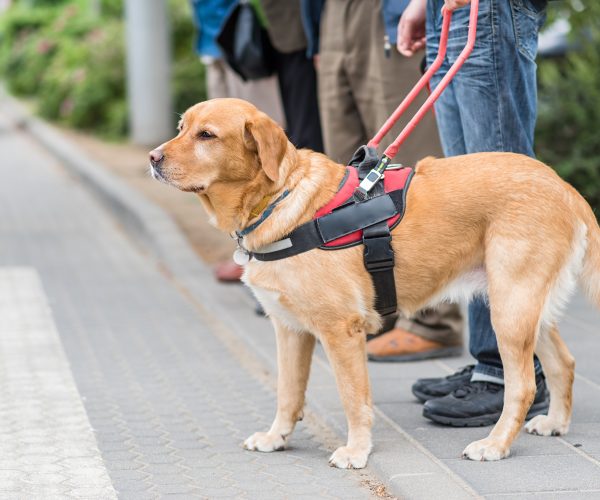
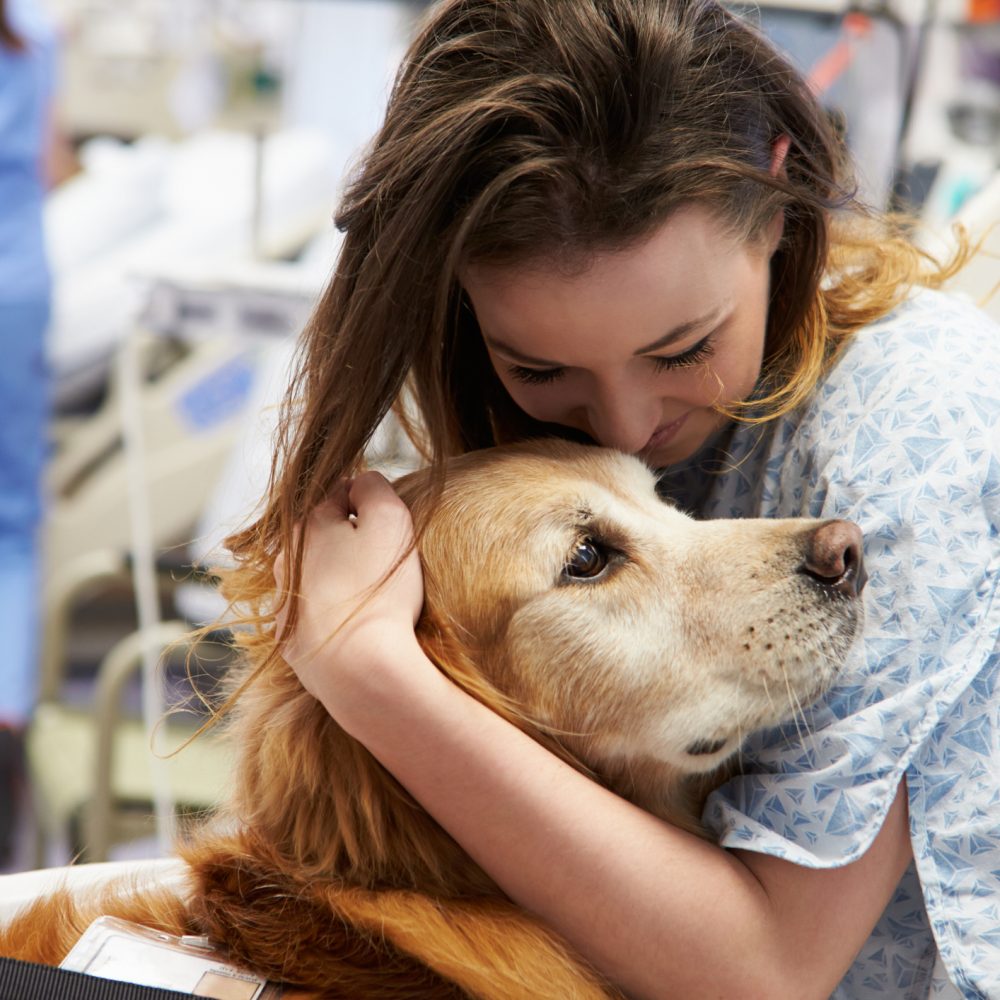
What a Therapy Dog Has to Tolerate
The training list looks nothing like a service dog’s.
Wheelchairs, walkers, IV poles, oxygen tubing, beeping monitors, floors that squeak. None of it can register as a problem. Clumsy handling from someone with limited motor control has to be accepted without a flinch or a retreat, and the dog has to settle on cue and stay settled while conversation goes on over its head — then get up, move next door, and do it again without winding up.
Most of that is temperament rather than training. A dog can be taught to tolerate a crowded room; wanting to be in one is not something you teach.
Knowing When to End a Visit Early
Watch for the lip lick, the turned head, the small hesitation before your dog gets up.
Those are the signs a dog has had enough, and they show up long before anything goes wrong. The teams facilities ask back are the ones who call it there — who say “we’ll finish on this room” and leave with the dog still keen, rather than pushing through two more corridors because the visit was booked for an hour. A tired therapy dog isn’t badly behaved. It’s just slower, flatter, and less reliable in a room where reliability is the whole job.


Where a Therapy Dog Fits, and
Where It Doesn't
If you want a dog that helps other people — residents at a care home, kids in a reading program, patients on a ward — a therapy dog is the right animal and we’ll train one.
If you want a dog that does a specific job for your own disability and comes with you everywhere, that’s a service dog, and it’s a different program with a different application. Regardless, we train two dogs a year with 100% commitment, and amazing results.
Frequently Asked Questions
How do I get my dog approved to visit a hospital or school?
The facility decides. Most set their own screening, insurance and scheduling requirements before a therapy team may visit, and those rules vary from one building to the next. Contact the place you want to visit first, then train toward what it actually asks for.
Can a therapy dog go anywhere a service dog can go?
No. Therapy dogs enter a facility by invitation and under that facility’s rules. The ADA’s access protections apply to service animals only.
What makes a good therapy dog?
Temperament, ahead of everything else — a dog that genuinely enjoys strangers, recovers quickly from surprises, and settles without needing to be told twice. Training refines that; it does not create it.
Can any breed be a therapy dog?
Yes. Size and breed matter far less than whether the dog genuinely wants the contact — a wolfhound that leans in beats a small dog that tolerates being handled. Some facilities set their own size or breed preferences, so ask before you train toward one.
Do therapy dogs need certification?
There is no federal certification for therapy dogs, but individual hospitals, schools and care facilities set their own requirements before they’ll allow visits. Check with the facility you want to visit before you start.
Tell Us What the Dog Would Be Doing
The right dog depends entirely on the room it’s walking into. So start there, and we’ll tell you honestly whether a therapy dog is what you need.
Training with YES · Sacramento, California · trainingwithyes.com