
Service Dog Training in Sacramento
Where a Dog Trains Decides How It Behaves in Public
A service dog that behaves beautifully in a quiet suburban backyard tells you nothing. The question is whether it holds together on a downtown sidewalk with a siren going, in a checkout line behind someone who wants to pet it, on a train car that lurches at the stop. Those are the conditions your dog will actually work in, so those are the conditions it gets trained in. We’re based in Sacramento and the dogs are raised here, which is less a marketing line than a description of where the hard repetitions happen.
Quick Takeaways
- Trained locally, on purpose: A dog proofed on Sacramento sidewalks, transit and store floors is ready for a Sacramento life.
- Three programs: PTSD and autism service dogs, both ADA compliant, plus therapy dogs — which carry no ADA access rights.
- Two dogs, two trainers: Twenty-five years, and deliberately small numbers.
- Businesses may ask two questions: Is the dog required because of a disability, and what task is it trained to perform. That’s the whole list.
- Faking it is a misdemeanor here: California prosecutes misrepresenting a service dog.
What Sacramento Specifically Asks of a Working Dog
Every city stresses a dog differently. This one has its own list.
Heat is the first thing. Valley pavement holds it well into the fall, and a dog that has never worked an afternoon parking lot in it will tell you so at the worst possible moment. Then there’s the mix of environments inside a short drive — Midtown’s narrow sidewalks and outdoor tables, the wide concrete aisles of a big-box store off I-80, light rail platforms, the crowds around the Capitol, a medical campus with automatic doors and squeaky floors.
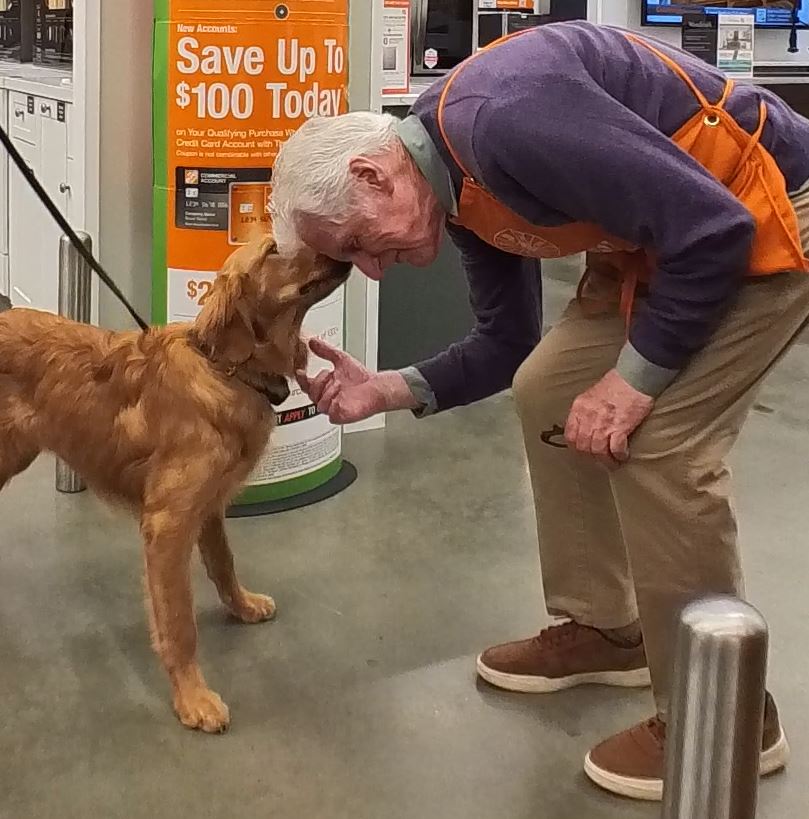
Daisy is photographed working a Home Depot. Forklifts, dropped lumber, strangers reaching over her — that store is a harder public-access test than most people assume.
Know Your Access Rights Before You Need Them
Most access arguments happen because the person behind the counter doesn’t know the rule either. Learn it once and the conversation gets short.
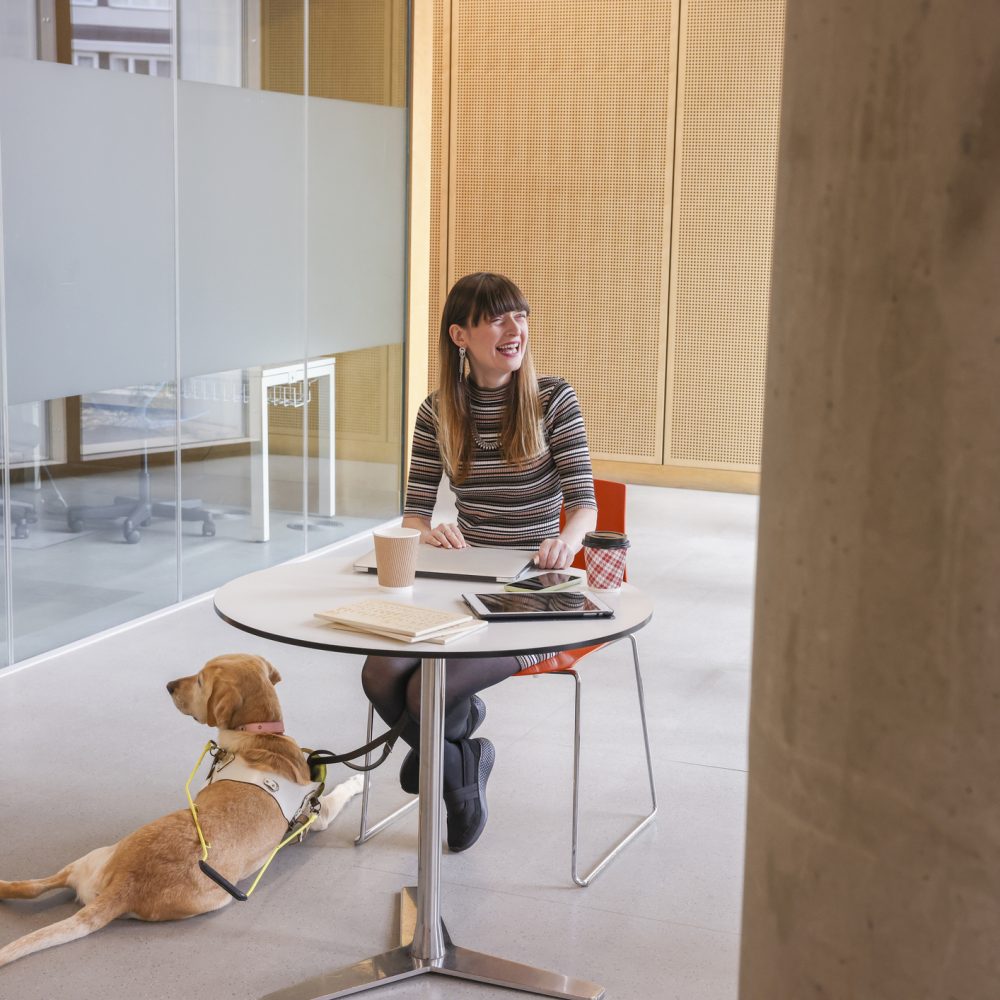
The Department of Justice sets it out plainly: staff may ask only two questions — is the dog a service animal required because of a disability, and what work or task has it been trained to perform. They may not ask for documentation, may not ask the dog to demonstrate the task, and may not ask about your disability. No certificate, registration or vest is required by the ADA, whatever the online registries claim.
Answer the two questions. Move on.
California Adds a Penalty for Faking It
There’s a reason access is getting harder for legitimate handlers, and it isn’t the handlers.
California Penal Code section 365.7 makes it a misdemeanor to knowingly and fraudulently claim to be the owner or trainer of a service dog. The penalty runs to six months in county jail, a fine up to $1,000, or both. The law exists because untrained dogs in vests have made staff suspicious of every dog that walks in.
Which is also why we train for public access as hard as we train for tasks. A dog that behaves flawlessly ends the argument before it starts.
Who We Place Dogs With
Three programs, and the right one depends on who the dog is working for.
A PTSD service dog works for one adult handler, doing physical task work on cue. An autism service dog usually works with a child inside a family, anchoring a routine and taking up space in rooms that overwhelm. A therapy dog works for everyone but its owner, visiting facilities by invitation. Each has its own page.
We accept applications naming PTSD, anxiety disorder, bipolar disorder, autism and medical disability, documented by a physician.

Being Local Matters After the Handover, Not Just Before
Most people weigh up a trainer on what happens before the dog arrives. The part that decides whether a placement holds is what happens afterwards.
A dog’s behavior drifts. Six months in, a cue gets sloppy, a handler’s timing slips half a second, a task that used to be automatic starts needing asking twice. That is normal, and it is far easier to sort out when the person who trained the dog can watch it work rather than take your description of the problem over email.
Distance makes that harder. It is a quiet argument for choosing someone near you, and it rarely makes anyone’s website.
Frequently Asked Questions
Where are you located in Sacramento?
Training with YES is based in Sacramento, California, and the dogs are trained throughout the greater Sacramento area — in the places they will have to work. Use the contact form and we’ll take it from there.
Do you train dogs for people outside Sacramento?
The dogs are raised and proofed around Sacramento, which is the point — a dog is steadiest in the kind of places it was trained in. If you’re further out, say so in the contact form and we’ll tell you honestly whether it still makes sense.
What questions can a Sacramento business ask about my service dog?
Two. Whether the dog is a service animal required because of a disability, and what work or task it has been trained to perform. Staff cannot request documentation, require a demonstration, or ask what your disability is.
Is it illegal to fake a service dog in California?
Yes. Under California Penal Code 365.7, knowingly and fraudulently claiming to be the owner or trainer of a service dog is a misdemeanor carrying up to six months in county jail, a fine up to $1,000, or both.
Does a service dog have to be a particular breed?
No. The ADA states that a service animal can be any breed and any size of dog, provided it is trained to perform a task related to the handler’s disability. What matters is temperament and training, not the breed on the paperwork.
Talk to Us
If a trained dog is the right answer for you, the application is where it starts. If you’re not sure yet, ask — we’d rather tell you no early than place a dog badly.
Training with YES · Sacramento, California · trainingwithyes.com